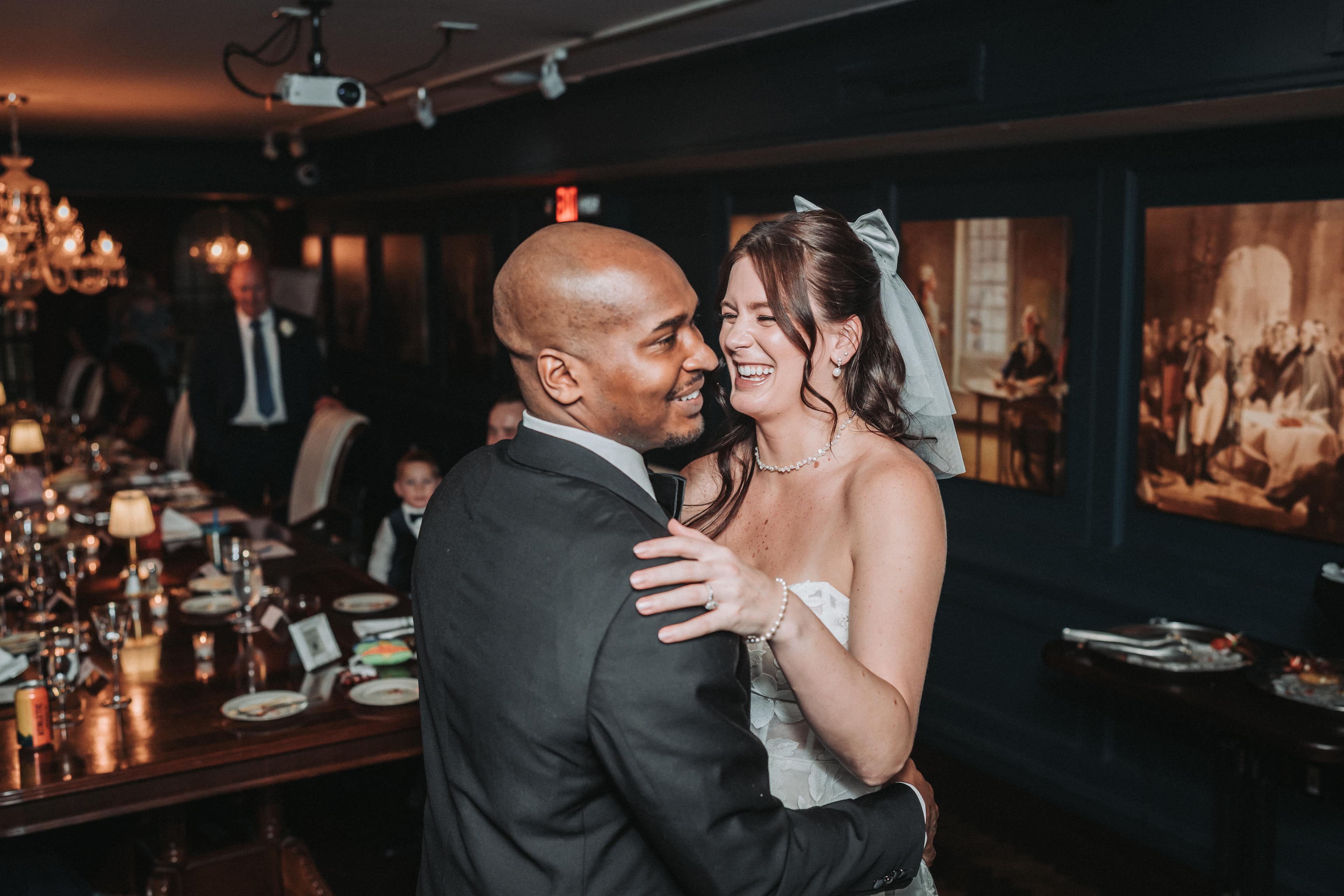
Somewhere between deciding you want your wedding filmed and deciding what you can spend, most couples land on the same idea: ask a friend. They have a decent camera. They are coming anyway. They offered.
It can work. We rent camcorders to these exact people most weekends, so we see what comes back, and the difference between the versions that work and the versions that do not has very little to do with the friend's ability. It has to do with what they were asked for.
Our bias, stated up front
We are a wedding studio. We shoot weddings for a living, and we also rent equipment to couples doing it themselves. So we profit either way, which is a strange place to write this from, and you should factor that in.
What follows is the version we would give a friend who asked us over dinner, including the parts that argue against spending money with us.
You are asking for three jobs, not one
When someone says yes to filming your wedding, they think they have agreed to point a camera at things. They have actually agreed to three separate jobs, and the second and third are the ones that fail.
- Be in the right place. Which means being in position several minutes before anything happens, which means knowing what happens next, which means having seen a timeline. Ceremonies do not wait.
- Keep it running. Batteries, cards, and the discipline of pressing record and leaving it alone. Most lost ceremony footage is not badly shot, it is not shot at all, because someone stopped recording between the processional and the vows and did not start again.
- Get the sound. The job nobody mentions when they ask, and the one that decides whether the film is watchable. A beautifully framed ceremony you cannot hear is not usable.
Ask for one job and you get one job. The camera will be pointed at the right things and the other two will be a matter of luck.
What comes back
The footage we see from friends filming has a recognisable shape, and it is not incompetence. It is a person trying to do a favour well while also being a guest.
The ceremony is usually there and usually fine, because it is the part everyone knows matters. What is missing is the connective material: the twenty seconds of the room filling up, the parents watching, the hands, the details someone spent nine months choosing. Those are the shots that make a film feel like a day rather than a recording of an event, and a friend does not get them because a friend does not know to look for them.
The other thing that goes is the second half. Energy drops after the ceremony, the camera comes out less, dinner is not filmed at all, and the dancing arrives as three clips shot from the edge of the floor. By then your friend has been working for six hours at a party they were invited to.
Both of these are fixable, and neither is fixed by asking your friend to try harder.
The four asks that reliably fail
"Just film the ceremony"
Sounds modest and is the hardest thing you could request. The ceremony is the one part with no second take, poor light, quiet voices, and a fixed vantage point. If someone is only going to do one thing, this is the one that most needs a tripod and a microphone.
Asking someone in the wedding party
They cannot film the processional because they are in it. They cannot film the toasts because they are giving one. They will hand the camera to someone else at the moments that matter most, and that person has had no briefing at all.
Asking one person to cover the whole day
Eight hours of continuous attention, carrying equipment, missing the meal, and going home without having attended the wedding. Most people who say yes do not realise this is the shape of it, and it is not fair to let them find out on the day.
Asking on the day
No timeline, no idea where to stand, no chance to hold the camera beforehand. Everything that could have been decided calmly gets decided in the ten seconds before it is needed.
The version that actually works
The setup that produces a watchable film is not one person doing more. It is splitting the work so that neither half requires skill.
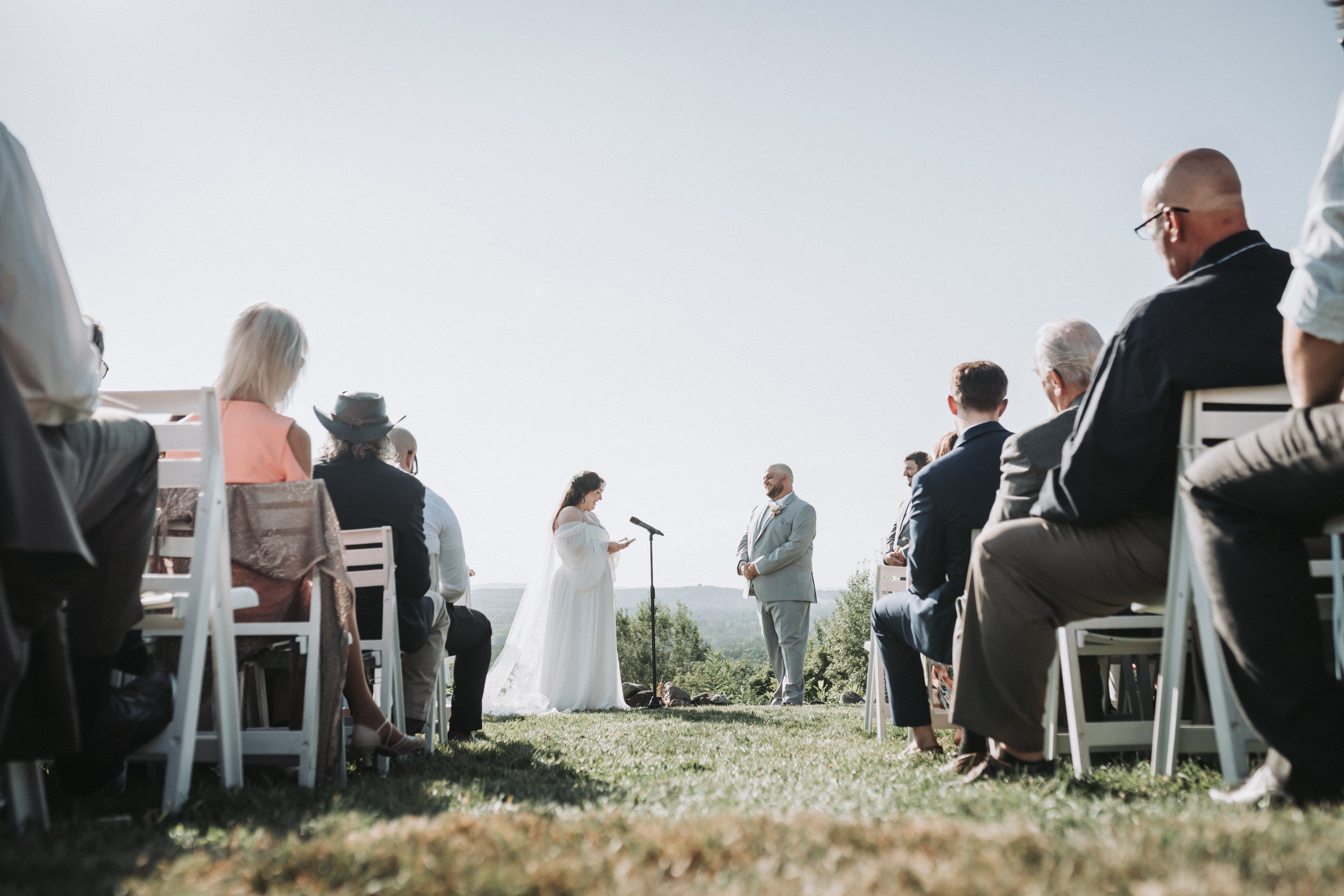
One camera that does not move. On a tripod, at the back or slightly to one side, framed wide enough to hold the whole ceremony area, started before the processional and left alone. Nobody has to operate it. It cannot be shaky, badly panned or accidentally stopped, and it guarantees you have the ceremony from beginning to end no matter what else happens.
One person roaming. Phone or camera, filming short clips of everything the fixed camera cannot see. Guests arriving, your parents, the details, the queue at the bar, the first dance from the middle of the floor rather than the edge. Short clips, held still, no zooming.
A microphone near the voices. On the officiant if you have one. A phone on voice memo at the base of the altar if you do not. This one decision does more for the finished film than any camera choice.
That is the whole method. The fixed camera means the unrepeatable part is safe, so the roaming person is free to be imperfect, and the pressure that makes friends miss things disappears.
If you would rather spread it across everyone instead of one person, that is closer to how guest-filmed wedding videos work, and it fails in a different and gentler way.
What to say when you ask
Most of the failure is in the vagueness of the request. Try something closer to this.
"We would love you to help film the wedding. It is not the whole day. There is a camera on a tripod at the back that runs by itself for the ceremony, so you are not responsible for that. What I would love from you is short clips through the day when you think of it, and to keep an eye on the tripod camera between the ceremony and dinner. Eat, drink, be a guest. If you are having a good time and you forget for an hour, we still have everything that matters."
Then send them five things you want, not fifty. A list of five is read and remembered. A list of thirty is skimmed and abandoned.
- Guests arriving and the room before anyone sits down
- Both sets of parents at some point, ideally watching rather than posing
- The details someone spent months on: the table, the flowers, the rings
- The first dance from the floor, not the edge
- Anything that makes you laugh
Be honest about what you are asking
If you want someone to film the whole day properly, you are asking for six to ten hours of work at an event they were invited to as a guest, plus the anxiety of being responsible for something that cannot be redone. That is a real favour and worth naming as one.
It also has a cost you should weigh, which is that the person will not have attended your wedding. Some people would genuinely rather have the job. Others say yes because they cannot say no. It is worth being certain which one you are asking.
When to just hire someone
Some situations do not suit this, and it is better to know now.
- Your ceremony is the whole point. A long religious ceremony, readings from family, vows you have written and rewritten. If that footage failing would genuinely upset you, do not make it a favour.
- The light is difficult. A dark church, a candlelit barn, an evening ceremony. Hard light is where the gap between a professional and a friend is widest and least fixable.
- Nobody actually wants to do it. If you are working through a list of people hoping one says yes, that is your answer.
- You want a film rather than footage. Filming and editing are separate skills. Plenty of friends can capture a day. Very few will cut it together, and the raw clips will sit in a folder.
That last one is worth pausing on, because it is the most common regret. If you have someone willing to shoot but nobody to edit, you can hand the footage to someone who cuts it for you, which is what our Kit does and why we built it. Our notes on what wedding videography costs lay out the actual numbers if you are deciding between the two.
Common questions
What camera should they use?
The one they already own and have used before. A borrowed camera nobody has touched is worse than a familiar phone. If you are renting something, get it into their hands a day early rather than an hour early.
Should we pay them?
If you are asking for the whole day, yes, or at least cover a meal, a plus-one and their travel. It also changes the relationship in a useful way: it becomes reasonable to send a timeline and a shot list.
What if they say yes and then go quiet?
Assume the fixed camera is your film and anything else is a bonus. That is the reason to set it up regardless of who else is helping.
Can they film and be in photos?
Yes, if the fixed camera is doing the heavy lifting. No, if they are the only coverage. That is the practical difference the tripod makes.
The short version
Do not ask one friend to film your wedding. Put one camera on a tripod so the ceremony is safe without anyone operating it, ask a friend for short clips and nothing more, put a microphone near the voices, and be clear that they are a guest first.
Done that way it works, and your friend still gets to come to your wedding. If reading this made you think you would rather not put it on anyone you know, that is a completely reasonable conclusion, and it is the one we would draw about our own wedding.