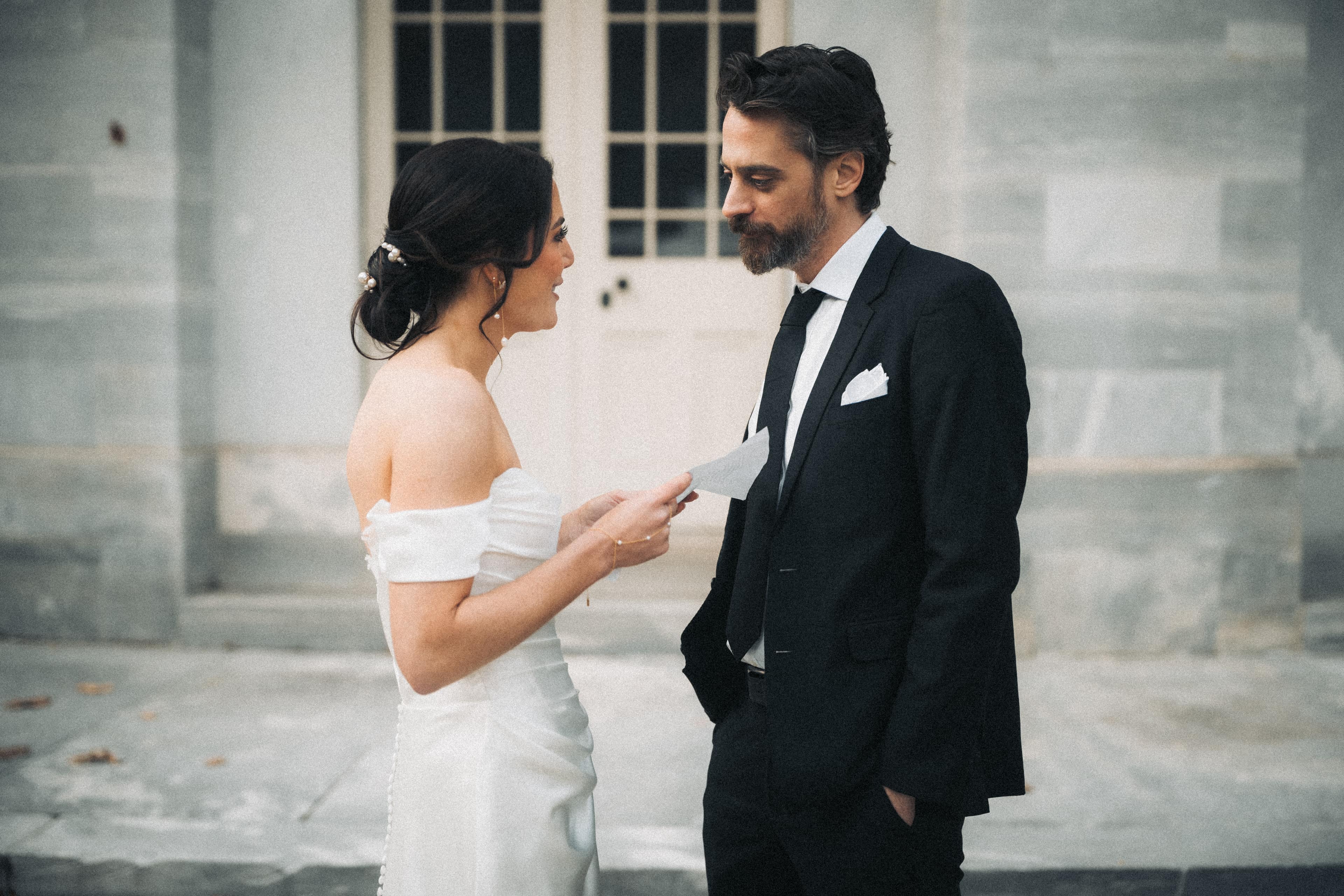
"Cinematic" is not a style. It is a word every wedding videographer in the country puts on their website, and it tells you almost nothing about what you will receive. The distinction that actually changes what you end up with is far more boring and far more consequential: whether your film contains your voices, or only music.
A three-minute film cut to a song is a fundamentally different object from a three-minute film in which you hear your own vows. Most couples do not learn which one they bought until it arrives.
Our bias, stated up front
We sell wedding films, and our own collections are split exactly along the line this article is about. So we have an interest in you understanding it, because the couples who do not understand it are the ones who are disappointed later.
What "cinematic" has come to mean
Originally it meant something real: shallow depth of field, deliberate camera movement, colour grading, an edit built around a narrative rather than a chronology. Film-like, as opposed to the static tripod-at-the-back-of-the-church video of the 1990s.
Then everyone adopted it. Today you will struggle to find a wedding videographer who does not describe their work as cinematic, including the ones producing exactly the unedited chronological video the word was invented to distinguish itself from. It has become the default adjective, like "artisan" on bread.
This matters because "cinematic" is doing the job in your head that three specific, checkable questions should be doing instead.
The question almost nobody asks: can you hear anything?
This is the single biggest difference between two wedding films at similar prices, and it is the one couples are most surprised by.
A music-only film is cut to a licensed track. It is beautiful, it moves well, and there is no speech in it at all. You do not hear your vows. You do not hear the toast. You see your grandmother laughing and you do not hear what she said.
A music-and-dialogue film weaves the actual audio of the day through the music: fragments of the ceremony, lines from the speeches, whatever was said in the moment. It requires microphones on people, a second set of decisions in the edit, and considerably more work.
Both are legitimate products. They are not the same product, and the gap between them widens every year you own the film. Music-only ages into a beautiful artifact of a day. Dialogue ages into the only recording that exists of how your father's voice sounded in 2026.
In our own collections the split is explicit. The entry collection is a three to four minute highlight, music only. The two above it are music and dialogue. That is not an accident of packaging, it reflects the actual difference in what has to happen on the day and in the edit.
If you take one thing from this article: ask every videographer you talk to whether their highlight film includes dialogue, and if it does, how they capture it. The answer to the second half of that question is where most wedding films quietly fail.
The second question: highlight, feature, or full document
These three words get used loosely and they describe genuinely different artifacts.
- The highlight film. Three to five minutes, tightly cut, the version you actually rewatch and the version you send people. Almost every package is built around one of these.
- The feature film. Fifteen to twenty minutes, the day told at length with room for scenes to breathe. Ours sits at fifteen to twenty and comes with a highlight alongside it, because they do different jobs and neither replaces the other.
- The start-to-finish documents. Not a film at all: the ceremony in full, the speeches in full, the special dances in full, edited only for camera angles. Unwatchable as entertainment and irreplaceable as a record. This is what your parents will actually want.
A five-minute highlight is not "shorter coverage" of the same thing. It is a different deliverable, and the full-length documents either exist or they do not. On our own collections they are included on the two upper tiers and can be added to the entry one, which is the sort of detail worth confirming with anyone you are quoting.
The third question: one camera or two
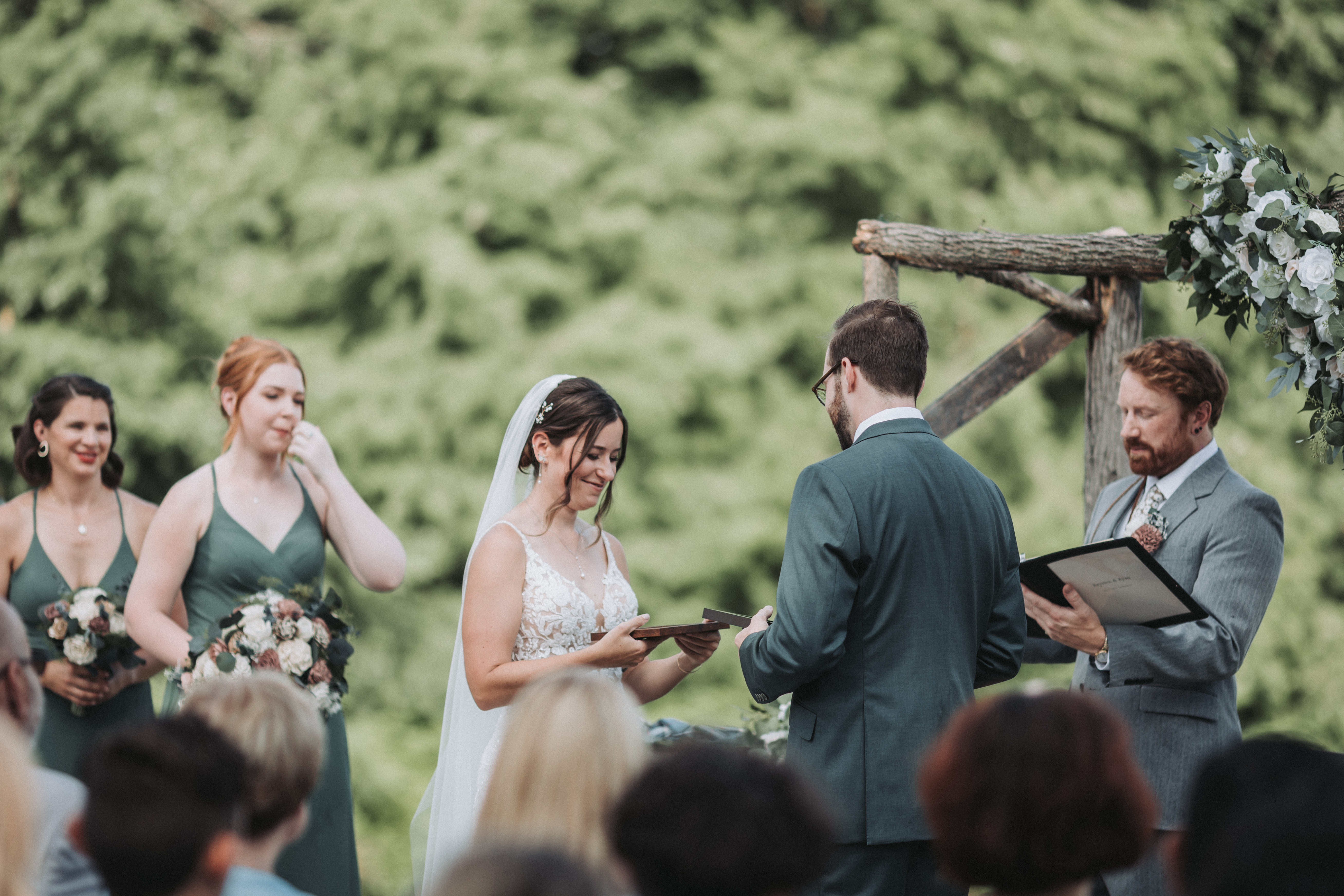
At the moment you say your vows there are two faces worth filming and they are pointing at each other.
One camera picks one. A single videographer at a ceremony is constantly deciding whose reaction to lose, and they will usually favour whoever is speaking, which means the face reacting is the one you do not get. The same is true of the toast, where the story is as much the listening as the telling.
Two shooters also means an angle exists when someone walks in front of the other one, which happens more often than anyone admits. This is the least glamorous of the three questions and it changes more frames than the colour grade does.
Documentary, cinematic, editorial: what people actually mean
Since the words are used inconsistently, here is roughly what a videographer means when they reach for each.
- Documentary. They intervene as little as possible. Nothing is staged or repeated for the camera. Fewer heroic shots, more of what actually happened. The trade is that a slow patch in your day is a slow patch in your film.
- Cinematic. Usually a signal about the look: shallow focus, movement, a graded image, an edit that reorders the day for feeling rather than chronology. Says nothing about audio, which is the point of this article.
- Editorial or fashion-led. Heavier direction. You will be asked to walk again, hold a moment, stand in better light. Produces the most striking images and the least candid ones.
- Hybrid. What most good studios actually do, and worth asking about directly: documentary through the ceremony and the reception, directed for a short window during portraits.
None of these is better. But "cinematic and documentary" on a website means the person wants both audiences, so make them tell you which one they default to when the timeline slips.
How to read a portfolio and tell the difference
Website copy will not answer any of this. Watching two films properly will.
- Watch one full film to the end, not the reel. A highlight reel is the best eight seconds from forty weddings. It is a showreel of the studio, not a sample of your film.
- Count the seconds of speech. Literally. If you get to the end and nobody has said anything, that studio's default product is music-only, whatever the package list implies.
- Watch a film from a venue like yours, at your time of year. Everyone looks good at golden hour in a field. A dark church in February is where the difference between two studios shows up.
- Ask for a complete wedding, not a favourite. "Can I see everything you delivered to one couple?" The answer, and the speed of the answer, tells you what a normal Saturday produces.
- Listen on real speakers. Phone speakers flatter bad audio and hide good audio. If the vows are the point, hear them properly before you sign.
So which do you actually want
- Music-only highlight if what you want is a beautiful short piece that captures the feeling of the day, and you are relaxed about not hearing anyone speak. It is the most affordable real wedding film and there is nothing wrong with it.
- Music and dialogue if the vows or the speeches are a reason you are hiring anyone at all. This is most couples, once the question is put to them plainly, and it is the upgrade we most often tell people is worth it.
- Add the full-length documents if there are people in the room whose voices you will want in thirty years, or family who cannot attend. This is the least glamorous line on any quote and the one couples thank themselves for.
- A second shooter if the ceremony matters more to you than the portraits.
Our own films are at cinematic wedding films, in full rather than as a reel, so you can run the count-the-speech test on our work before you run it on anyone else's. Every collection and what is in it is on the pricing page, and each of our fifteen cities lists its own local prices. If a full-service film is out of reach, the middle path is here.
Common questions
What is a cinematic wedding video?
Strictly, a film shot and edited with feature-film technique: shallow depth of field, deliberate camera movement, colour grading, and an edit built around narrative rather than chronology. In practice the word has become the default adjective in wedding video and almost every studio uses it, so it is close to useless as a filter. Ask instead whether the film includes dialogue, how long it is, and how many cameras were at the ceremony.
What is the difference between a cinematic and a documentary wedding video?
Cinematic usually describes the look: graded image, shallow focus, movement, an edit reordered for feeling. Documentary describes the approach: minimal intervention, nothing staged or repeated for the camera, the day as it actually ran. They are not opposites and most good studios work as a hybrid, documentary through the ceremony and reception and lightly directed during portraits.
Should my wedding video include the vows and speeches?
If the vows or the toasts are a reason you are hiring anyone, yes, and you have to ask for it specifically. Many entry-level highlight films are cut to music with no speech at all, which means you never hear your own vows. Films that carry dialogue need microphones on people and more work in the edit, and they are usually a tier up as a result.
How long should a wedding video be?
A highlight film is normally three to five minutes and is the version you actually rewatch. A feature film runs fifteen to twenty and is for sitting down with. Full-length edits of the ceremony, speeches and dances are separate again and are not really films at all, they are records, and they are the thing parents ask for most.
Do I need two videographers at my wedding?
At the vows there are two faces worth filming and they are pointing at each other, so one camera is always choosing which reaction to lose. The same applies to the toasts, where the listening matters as much as the telling. If the ceremony matters more to you than the portrait session, a second shooter is the upgrade to buy first.