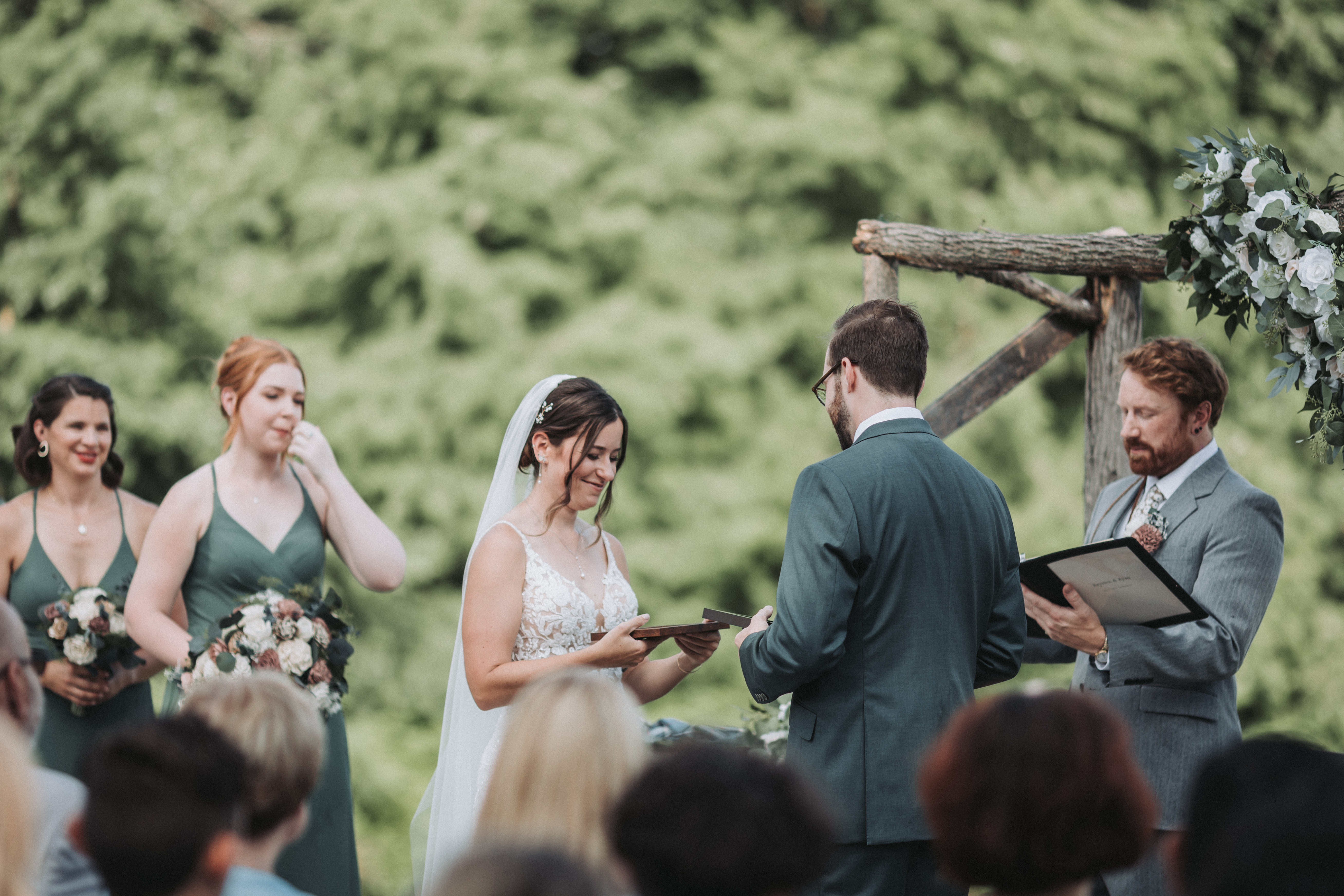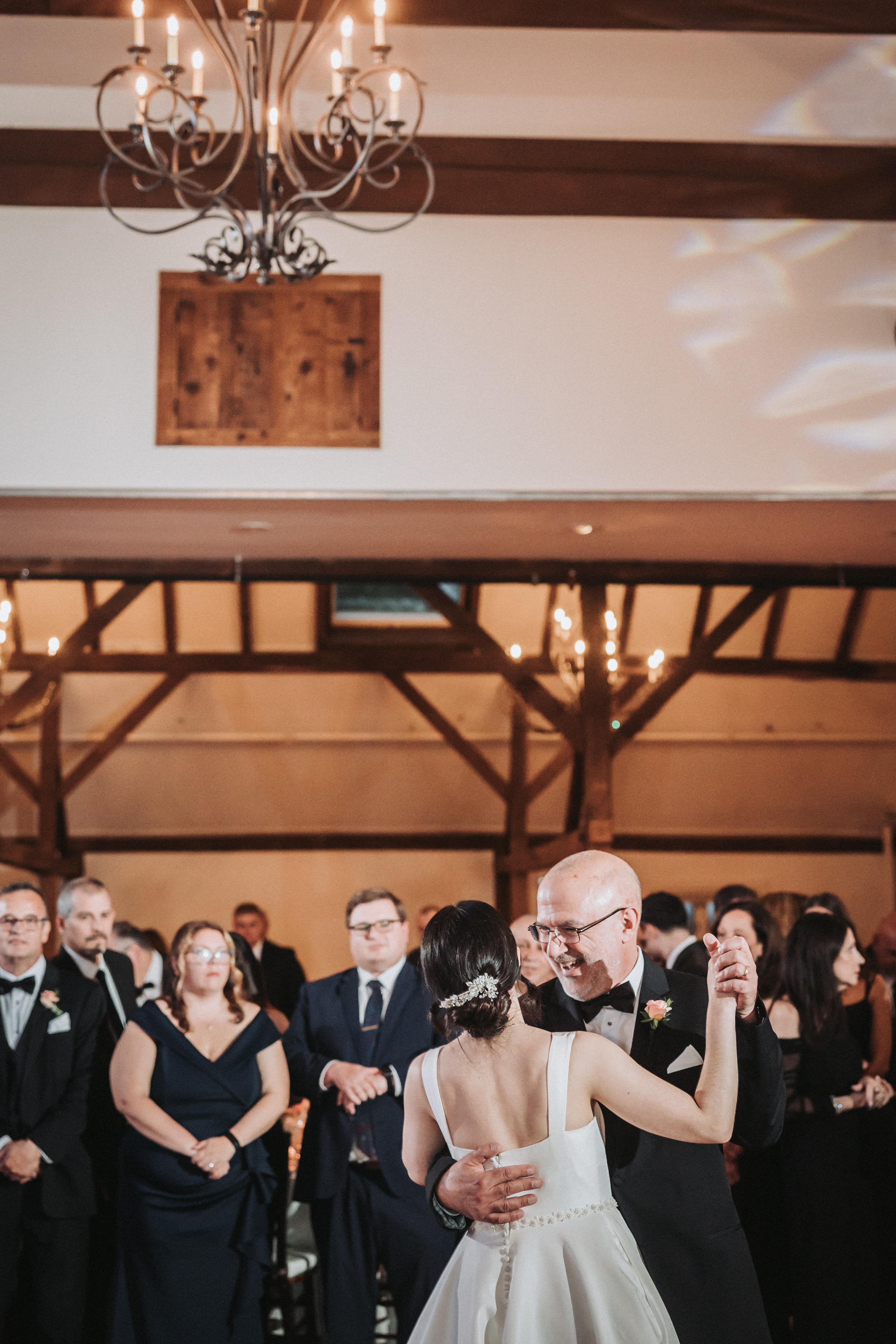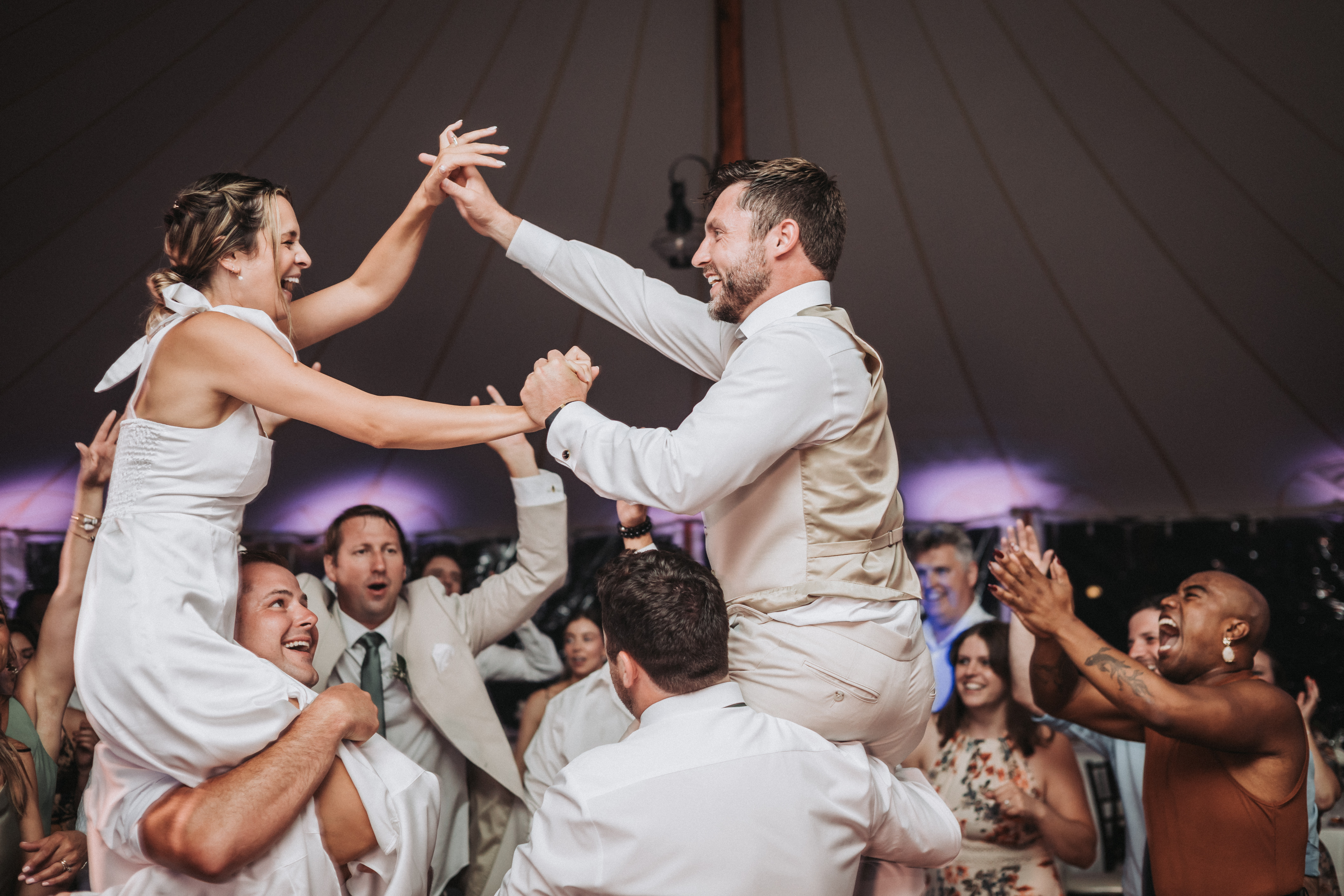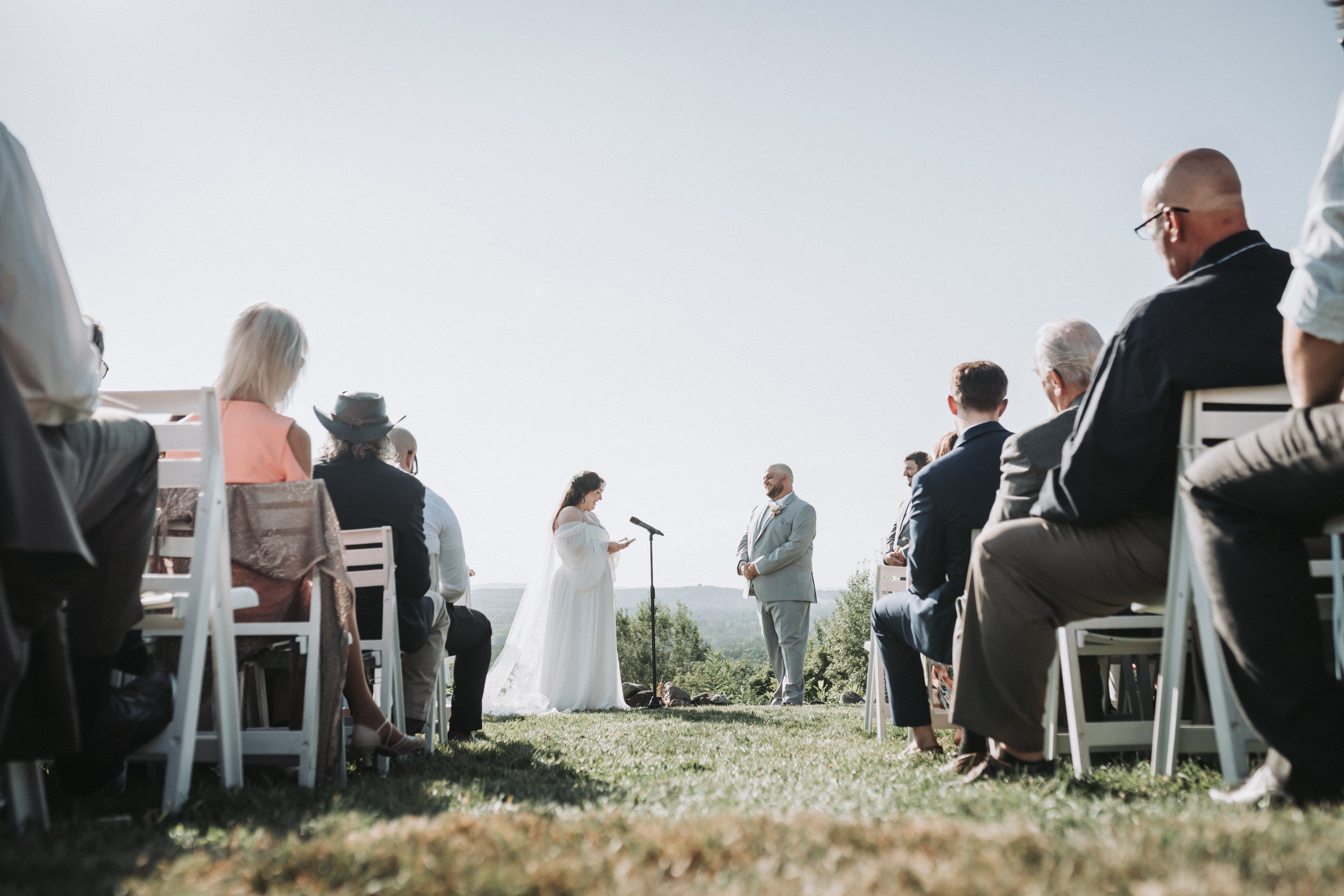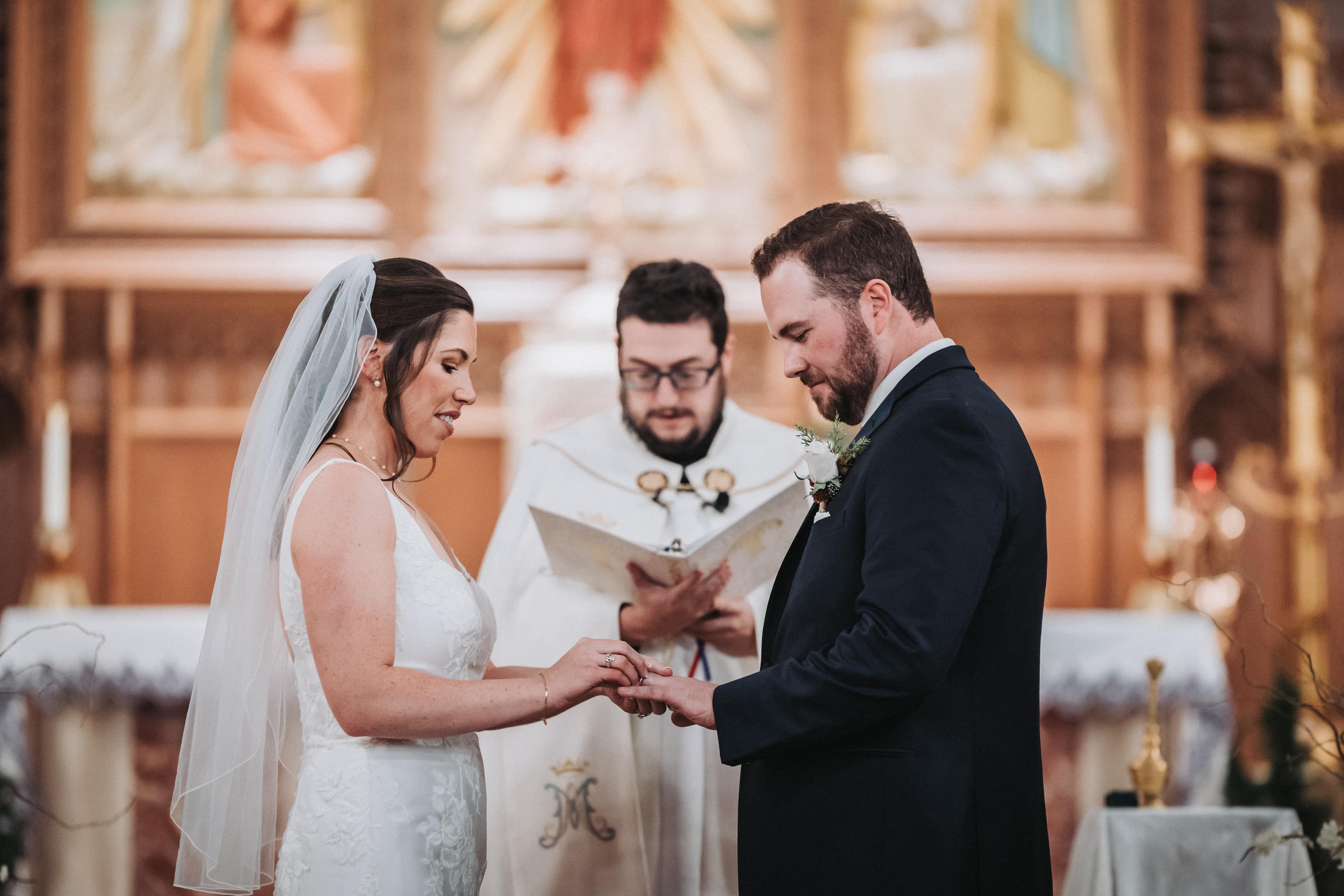
There is one failure that shows up in almost every wedding video a couple makes themselves, and it is not shaky footage or bad framing. It is that you cannot hear the vows.
The picture is usually fine. The couple is in frame, the light is soft, the moment is there. And then you turn it up and what you get is a room tone of shuffling programmes, a cough four rows back, an air conditioning unit, and two people you love saying something to each other that is gone forever.
This is the most recoverable problem in wedding video and the most commonly skipped. It costs very little to solve and it cannot be fixed afterwards.
Our bias, stated up front
We are a wedding studio, and we rent a microphone kit as a paid add-on. So when we tell you that ceremony audio matters, we have a commercial interest in you believing it.
Read on with that in mind. We are telling you anyway because we also see what happens without it. Couples who rent our camcorders upload their ceremony audio to us afterwards so we can cut it into the film, which means we sit and listen to a great many wedding ceremonies recorded by people who are not sound engineers. The failures repeat. They are the same handful every time, and every one of them is avoidable the morning of.
Why the camera cannot hear your vows
A camera at the back of the aisle is doing something your ears are not. When you stand in that room, your brain isolates the voices you care about and pushes the rest down. A microphone cannot. It records everything arriving at it, in proportion to how close that thing is.
Sound falls off fast with distance. Roughly, doubling the distance from a speaker quarters the sound energy reaching the mic. A camera thirty feet back is not getting a slightly quieter version of the vows. It is getting a much quieter version, mixed at nearly equal volume with every sound that happens to be nearer to the camera than the couple is, which is most sounds in the room.
That is why the recording sounds like the room and not like the ceremony. The camera was never in a position to hear it. No amount of turning it up in editing separates the two, because by the time it is recorded, the vows and the coughing are the same signal.
The four places ceremony audio can come from
In practice there are only four sources, and they are not equally good.
- A clip-on microphone on the officiant. The best single choice, and the least obvious one. The officiant stands between the couple and faces them, usually two to three feet away, and speaks for most of the ceremony anyway. A mic there picks up the officiant clearly and both partners well.
- A clip-on microphone on one partner. Excellent for that person's vows, weaker for the other's, because they are facing each other rather than facing the mic. Best used as a second mic rather than the only one.
- A feed from the venue's sound board. If the ceremony is already amplified, the house system has a clean signal. It is the best audio available and the hardest to arrange, because it needs a person, a cable, and permission. Ask early or not at all.
- The camera's built-in microphone. Fine for the room, the music, and the applause. Not a source for vows. Treat it as the safety net it is, not the plan.
Our own mic add-on ships two clip-on microphones for exactly this reason: the recommended setup is one on the officiant and one on a partner, so the vows are covered from two angles and a single failure does not lose the ceremony.
Where to actually clip the microphone
Position matters more than equipment. A cheap mic placed well beats an expensive one placed badly, and most of what we hear going wrong is placement.
- High on the chest, roughly a hand's width below the chin. Close enough to be clearly closer than the room, far enough to avoid breath noise.
- On the outside of clothing, never underneath. A mic under a lapel, inside a jacket or beneath a stole sounds muffled and picks up every movement of the fabric over it. This is the single most common mistake we hear.
- Away from anything that can touch it. A necklace, a boutonniere, a lanyard, a rosary, a zip. Anything that swings will eventually tap the mic, and a tap is far louder on the recording than it was in the room.
- Clipped to a firm edge. A lapel, a placket, a collar. Loose or floaty fabric moves independently and rustles.
- Facing up toward the mouth, not flat against the body or pointing at the floor.
Do the whole thing at least fifteen minutes before the ceremony, and then have the person wearing it talk normally while someone listens back on headphones. Fifteen seconds of listening catches almost everything below.
What actually goes wrong
These are the failures we hear over and over in the files couples send us, in rough order of frequency.
Fabric rustle
A steady scratching under the speech, worst whenever the wearer moves. Almost always a mic under clothing or clipped to loose fabric. Unfixable afterwards, because the rustle sits in the same frequencies as the voice.
The mic on the wrong person
One mic, clipped to the partner who does not speak first, or to a groom who then turns away to face his partner for the entire vow exchange. You get one side of the most important two minutes of the day. If you have a single mic, put it on the officiant.
The battery
Clip-on mics get switched on during getting ready, because someone is being thorough, and then run for two hours before the ceremony starts. Switch it on fifteen minutes before, not at breakfast. If it takes a battery, put a fresh one in that morning regardless of what the indicator says.
Wind
Outdoors, wind is the thing that ruins ceremonies. It is not a background noise, it is a roar that swamps everything. If you are outside, the foam cover that comes with the mic is not optional, tuck the mic slightly behind a lapel edge so the fabric shields it from the prevailing direction without covering it, and consider that an exposed cliff or a beach at four in the afternoon is a genuinely hard place to record two quiet people.
Left running
The mic stays on through cocktail hour, into dinner, and records ninety minutes of one person's private conversation. This is worth saying out loud to whoever is wearing it, both for the recording and for them.
Nobody pressed record
It happens. The mic was placed perfectly and it was never recording. Have one person whose only job in the last five minutes is to confirm the camera is rolling and the mic is on.
Toasts are a different problem
Ceremony audio and reception audio fail differently. A ceremony is quiet and far away. A reception is loud and close.
At the toasts, the speaker usually has a handheld microphone already going through the house system, so the room is amplified and your camera at the back is now recording something loud enough. The problem shifts to distortion and to the crowd, especially the table nearest the camera, who are closer to it than the speaker is.
The fix is placement again. Get the camera closer to the speaker than the nearest loud table, and if you have a spare clip-on mic, put it on the podium or the mic stand rather than on a person. For more on how the reception hangs together, our notes on running a reception cover the timeline side of it.
If you have no microphone at all
Do this, because it costs nothing and it works far better than most people expect.
Put a phone on voice memo, in airplane mode so nothing interrupts it, screen down, tucked at the base of the altar, on the officiant's stand, or in the officiant's inside pocket. Start it before the processional and leave it. A phone two feet from the vows will produce audio dramatically better than a camera thirty feet away, and it can be lined up against the video afterwards.
Two phones in two places is better still, because you get a spare. This is the single highest-return five minutes of preparation available to anyone filming their own wedding.
Common questions
Will the officiant mind wearing a microphone?
Almost never. Officiants are miked constantly and most will place it better than you would. Ask when you confirm the ceremony details rather than on the morning.
Can bad audio be fixed in editing?
Noise can be reduced. Distance cannot be undone. If the vows were never captured louder than the room, there is nothing underneath the noise to recover. This is why the fifteen minutes beforehand matter so much more than anything afterwards.
Is one microphone enough?
One well-placed mic on the officiant will get you a usable ceremony. Two gets you a safety net and noticeably better vows, which is why our kit ships a pair.
What about the ring exchange and the kiss?
Those are picture moments, not audio moments. The audio that matters is the vows and whatever the officiant says around them, which is why the officiant mic covers so much of the day's value on its own.
The short version
Put a microphone on the officiant. Clip it high, on the outside of the clothing, away from anything that swings. Switch it on fifteen minutes before, not two hours. Listen back for fifteen seconds before you trust it. If you have no mic, put a phone at the altar on voice memo.
If you are filming the day yourselves, our guide to filming your own wedding video covers the picture side, and The Kit is the camera and microphone setup we rent for exactly this. If you would rather hand the whole problem to someone else, that is what we do the rest of the time.