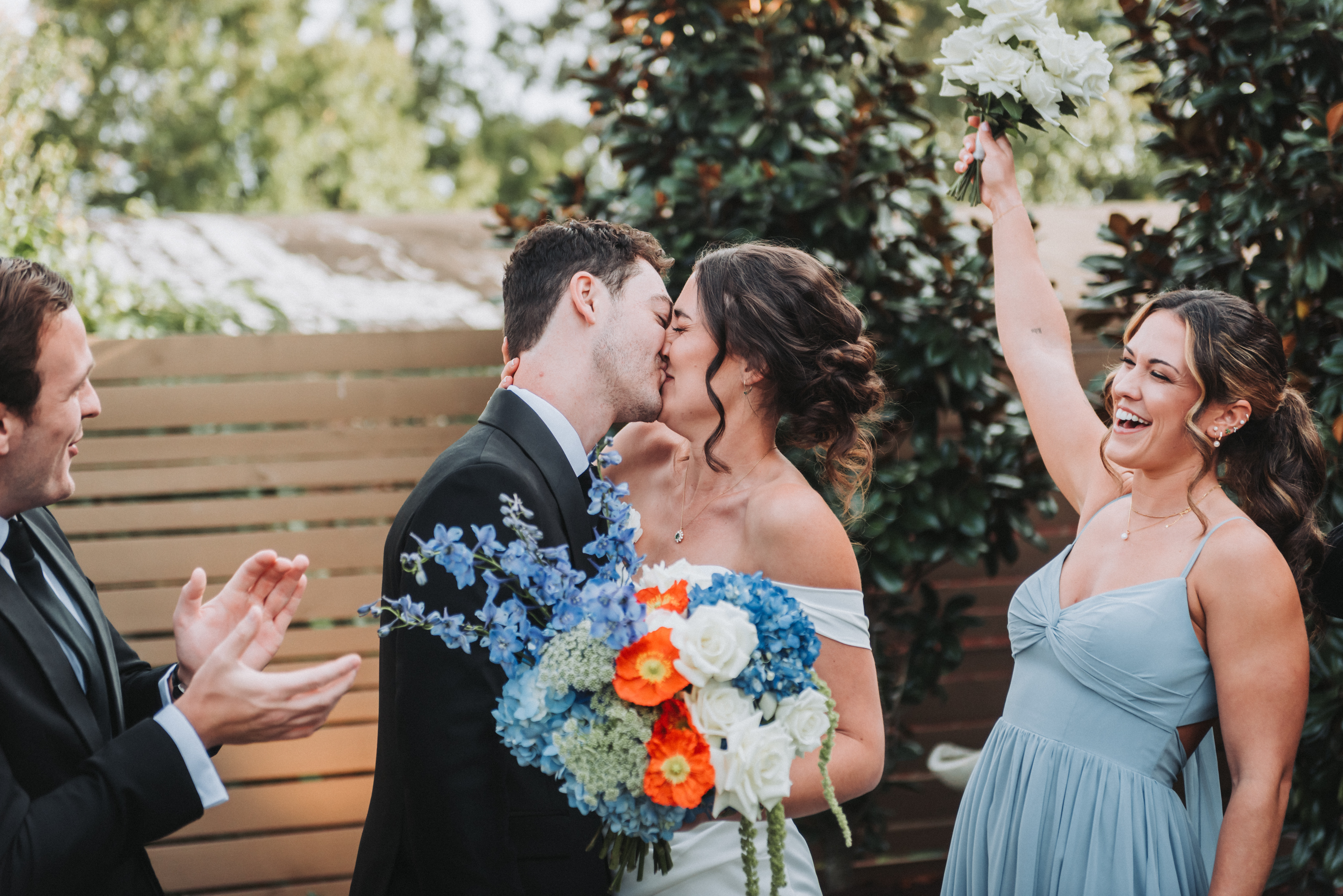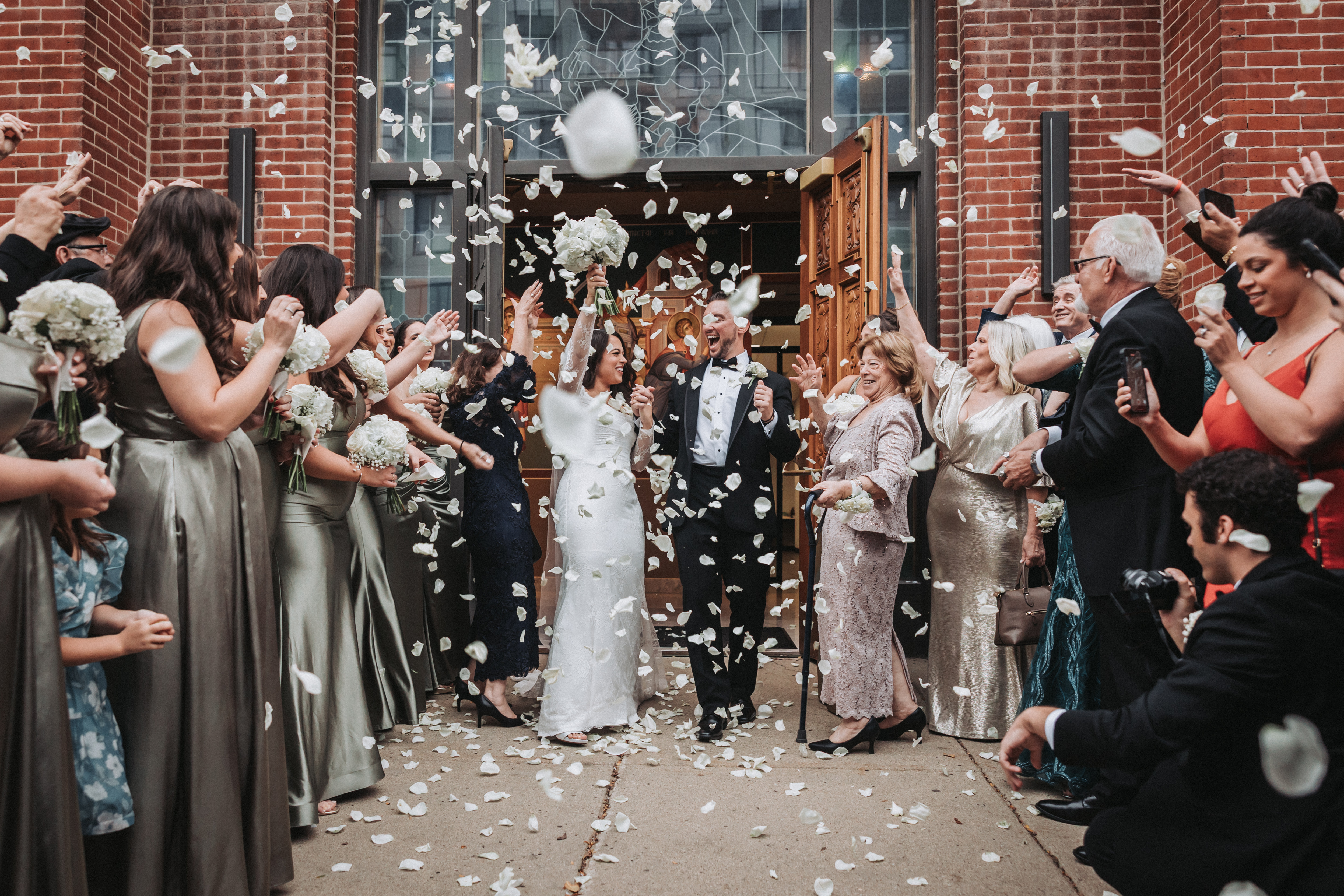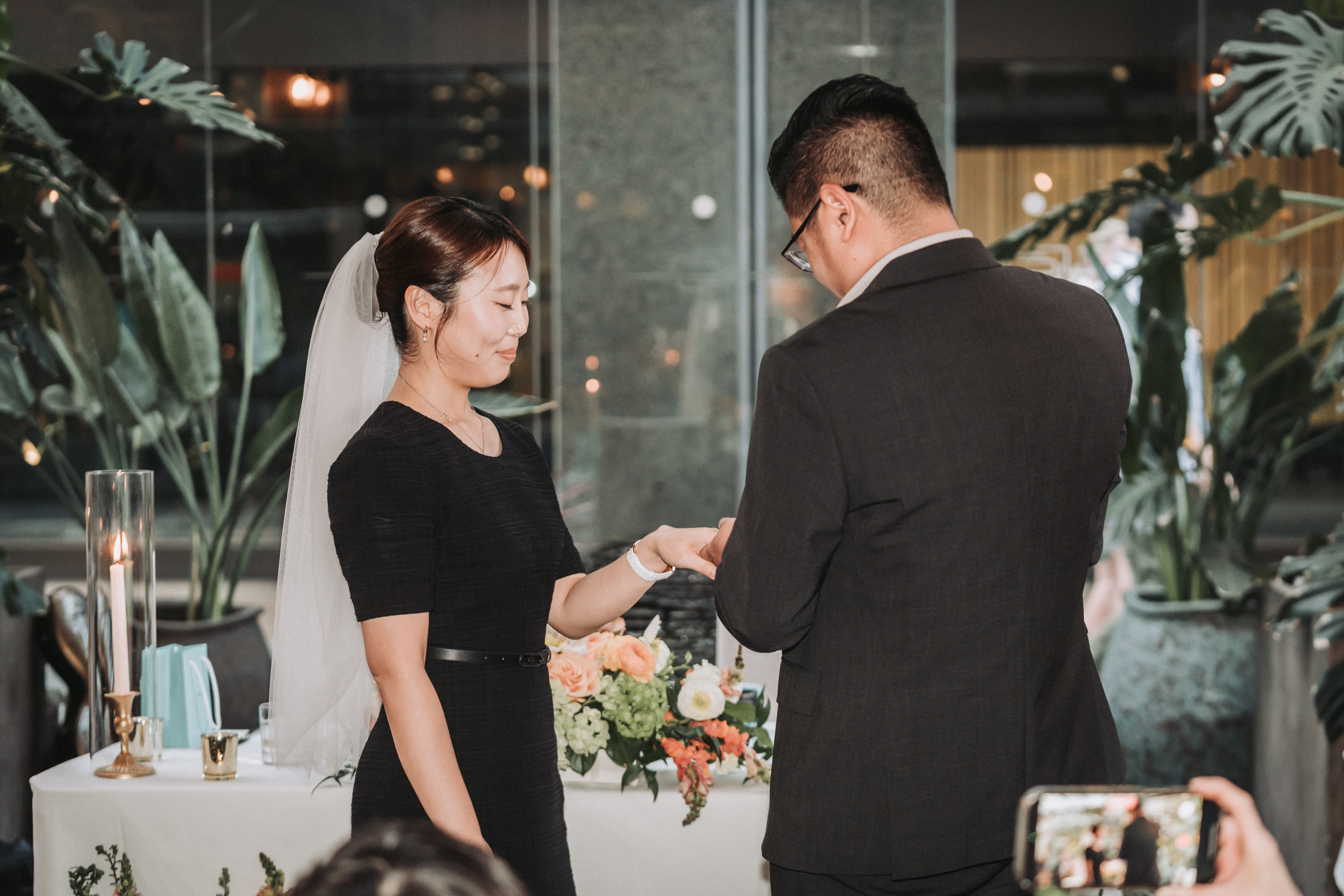
A camcorder wedding video is footage shot on a consumer camcorder, usually handheld by the people at the wedding, for the feel of a home movie. There are three ways to get that look: real tape, a modern camcorder, or professional footage with a filter on top. They are not the same thing, and the difference is mostly not the camera.
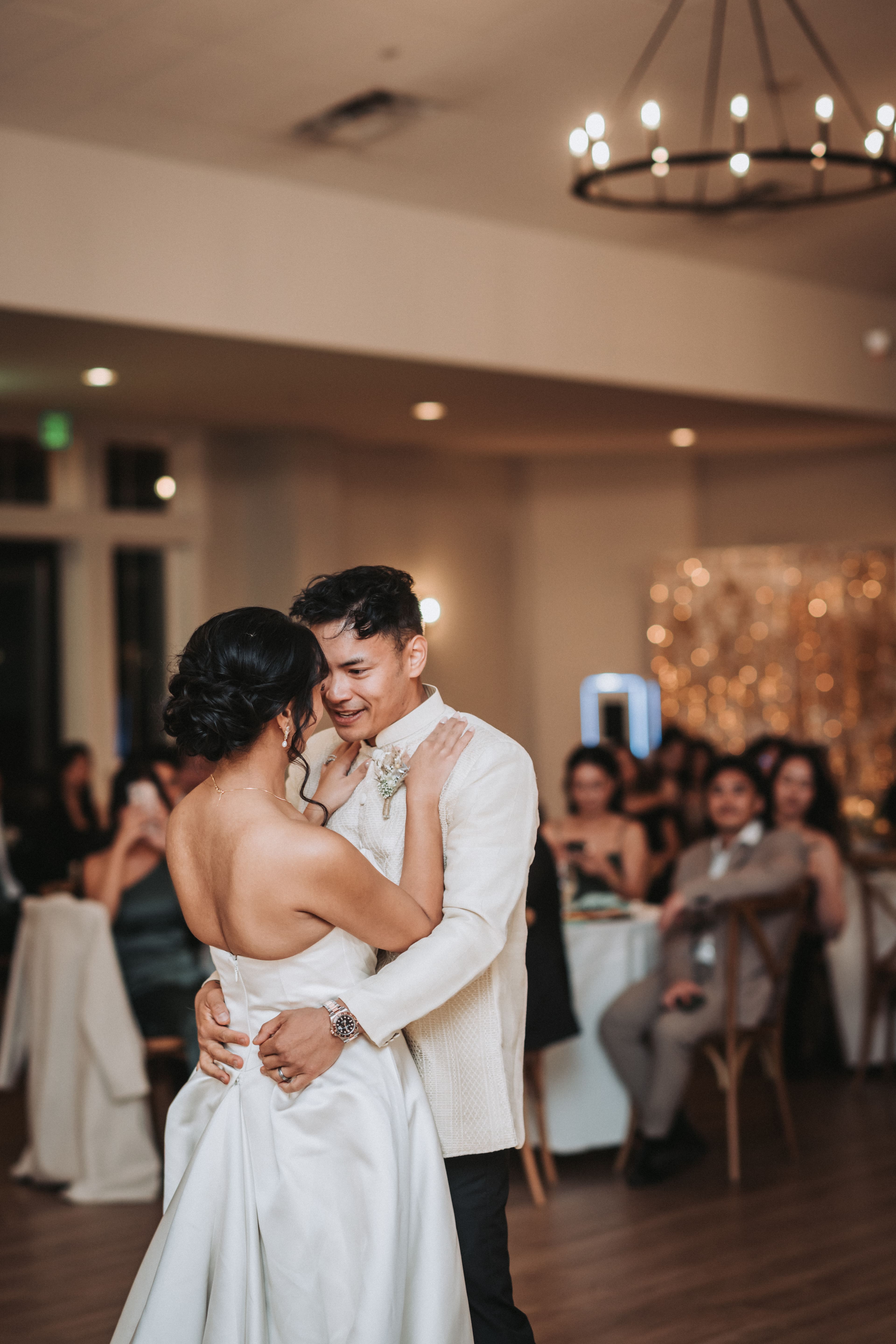
The "dad cam" wedding is everywhere right now, and for good reason. Couples are shown a clip of their own first dance shot on an old camcorder next to the same moment in polished 4K, and the camcorder clip is the one that makes them go quiet. It looks like a memory instead of an advert.
Our bias, stated up front
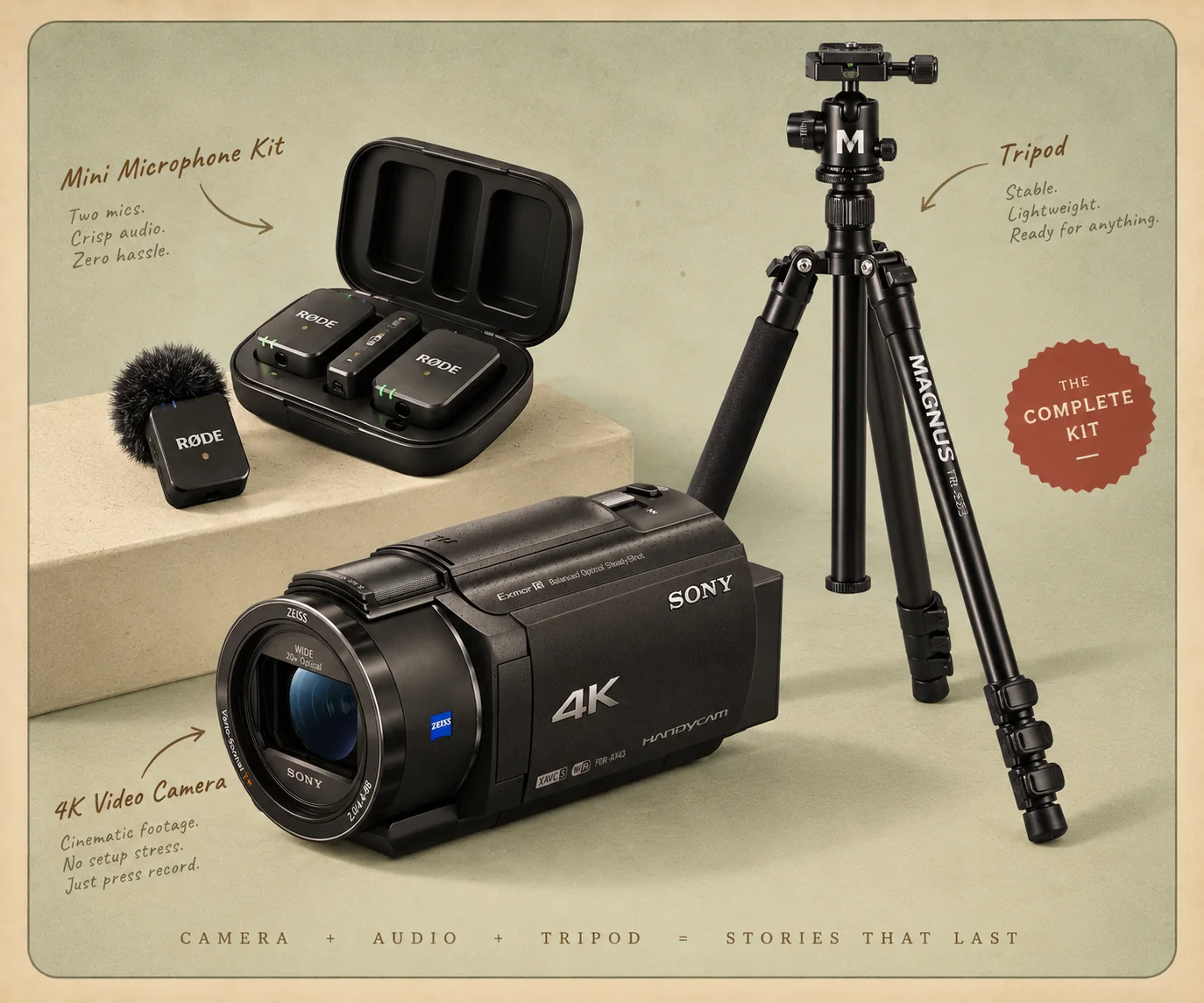
We rent modern camcorders for exactly this. The Kit is a 4K Sony Handycam we post to you for your wedding window, filmed by your own people, and edited by our studio afterwards. We do not sell tape coverage. So we have an interest in one of the three options below, and no reason to leave out the costs of the other two. Weigh what follows with that in mind.
What "dad cam" actually means
Ask people what makes an old home movie feel like one and they will say the grain, the color, the date stamp in the corner. Those are real, but they are not the main thing. Watch a family video from 1994 with the sound off and the texture gone, and it still feels like a family video. What gives it away is who was holding the camera and how:
- It was held at eye level, from inside the group, not from the edge of the room.
- The person filming was part of the moment, and you can hear them laughing or talking behind the lens.
- It stays on things too long, zooms in clumsily, and swings to whoever just started speaking.
- It films the people nobody would hire a crew to film: the aunt at table nine, the kids under the dessert table.
That is the part couples are actually responding to. The texture is the seasoning. Keep that in mind, because it decides which of the three routes gives you what you want.
Route 1: real tape
A photographer or videographer brings a vintage camcorder, usually VHS-C, Hi8 or MiniDV, and shoots part of the day on actual magnetic tape. This is usually sold as an add-on to a photo or video package.
What you get is genuine: soft standard-definition picture, usually in the square 4:3 frame, color that bleeds, the occasional tracking wobble. Nothing added in an edit reproduces every artifact of real tape exactly. What almost nobody selling it mentions:
- Transfer happens in real time. Tape has to be played back, start to finish, on a working deck or camera and captured as it plays. An hour of tape is an hour of transfer, on equipment that has not been manufactured in years. Heads wear out and old tape can drop out mid-playback.
- Low light is hard. Consumer camcorders of that era need a lot of light. A candlelit reception or a dim dance floor comes back noisy, smeared or close to black unless someone puts a lamp on it.
- There is one copy. Until it is transferred, the tape is the only record. A chewed or damaged cassette is simply gone.
- The shooter is still a professional. If the vendor films your tape footage the way they film everything else, from the edge of the room with careful framing, you get the texture without the feel. Ask whether they hand the camera to guests, or film it themselves.
None of that makes tape the wrong choice. If the texture itself is the point and you are happy with a few minutes of it, it is the real thing. It is the same trade we described for Super 8: a beautiful format, and nobody selling it volunteers the practical cost.
Route 2: a modern camcorder
This is what we rent, so read it as our side of the argument. A modern camcorder keeps the part that makes dad cam feel real: a handheld camera with a zoom rocker, held by your people, from inside the room. It drops the parts that make tape risky.
- It records clean sound as well as picture, so the toasts and the room are actually there.
- It copes with dim rooms far better, and ours ship with an LED fill light for exactly the moments tape struggles with.
- Nothing needs transferring in real time. The footage is a file on a card, and a 256GB card holds a whole weekend at 4K.
- You get every raw clip back, in order, alongside the edited film, so nothing only exists on a cassette.
The honest trade: on its own, a modern camcorder does not look like 1994. It looks like right now, filmed by your cousin. For a lot of couples that is the point. For some it is not enough texture, and if the grain is non-negotiable, route 1 is the one that actually delivers it.
Route 3: a filter on professional footage
The cheapest way to sell the look is to shoot the day as normal, on cinema cameras and gimbals, and lay grain, color shifts and a timestamp over it in the edit. It is easy to offer because it costs nothing extra to shoot.
It rarely fools anyone, and the reason is the list at the top of this post. The camera glides. The compositions are too good. The background is softly out of focus in a way no 1990s camcorder could manage. Your brain reads the operator before it reads the grain, and the operator is obviously a professional. A filter works best on footage that was already shot like a home movie, which brings you back to who was holding the camera.
What actually works
The version that holds up is the one built in the right order: film it like a home movie, on something that records reliably, and decide later how vintage you want it to look. Grain and color can always be added to clean footage in an edit. Nothing can take tape damage back out, and nothing can add a moment that was never filmed.
A few things make the biggest difference, whichever camera you choose:
- Hand the camera to more than one person. The best dad cam footage comes from three or four people over the evening, not one designated operator. We wrote about guest-filmed wedding video and asking a friend to film in more detail.
- Let it roll. Long, unbroken takes are the texture of a home movie. Short, careful clips feel like content.
- Get close for the toasts. A camcorder microphone hears the room, not a speaker thirty feet away. For vows and speeches a clip-on mic is what makes them usable, which is why our two-camera kits include them. Our post on ceremony audio explains why.
- Do not zoom in the dark. Zooming narrows the light the camera can gather. In a dim room, walk closer instead.
- Film the people, not only the couple. In twenty years the shot you will care about is the one of someone who is no longer here.
If you are planning to film it yourselves, our guide to filming your own wedding video covers the shot list. And if all you want is candid stills rather than motion, we ran the same kind of arithmetic on disposable cameras.
Which route should you choose?
- Real tape if the texture is the whole point, you are happy with a few minutes of it, and your vows and toasts are being recorded properly by someone else.
- A modern camcorder if the point is your people filming your day, you want the sound, and you would rather have the whole evening than a few careful minutes.
- A filter if you are already hiring a videographer and want a nostalgic edit as a style, knowing it will read as a style rather than a memory.
If the second one sounds like yours, here is how The Kit works. And if you are weighing the song for the finished film, read why most wedding films cannot use the song you love before you pick one.